Showing posts with label lists. Show all posts

Monday, 9 May 2022

A walking tour of Beatles sites

 Liverpool (sabbatical 2, week 3)

The Beatles are, of course, ubiquitous in Liverpool, from the name of the airport (Liverpool John Lennon Airport) to buildings named after John and Yoko at the universities and colleges in the city, to the weed-like spread of museums detailing their lives and music.  The museums will have to wait for another post; for this one Craig is going to walk around some real Liverpool Beatles sites.  So, he humbly submits to you this itinerary for a Beatles Walking Tour.  Transit times are from Googlemaps, he didn't actually time himself.

Transit (10 minutes) - the closest train station to the important sites is West Allerton.  You'll probably have to go from Lime Street, not Central Station.  Lime Street to West Allington is ~10 minutes.

Transit (15 minutes)  - exit the station, turn right. Take that road to the divided 4-lane motorway (B5180).  You'll pass a police academy.  Forthlin Road is on the right.

1. Paul McCartney's Childhood Home (20 Forthlin Road).  Both Paul and John's childhood homes are owned by the National Trust and do not have drop-in visiting hours.  You need to contact the National Trust and navigate their truly horrendous website to purchase tickets for a guided tour.<--use this page only; scroll down under the heading "Book Your Visit"; you'll have to choose your pick-up location first, and it cannot be changed (even though there's a button to change it, it did not work).  I did not do the tour, because the pickup locations are far from anything (including the houses you'll be touring) and sell out quickly.  There is a plaque and it's a nice pleasant neighborhood.

Transit (25 minutes) - back out to B5180, cross the road and turn left, take any of the next three rights.  These streets all end in a T-intersection, turn left and then right into the Allerton Manor Golf Club.  There is a walking path that runs along the edge of the course that is a pleasant walk through the woods.  Upon exiting the path, cross the 4-lane divided motorway (A562) and turn left to very shortly arrive at:

2. John Lennon's Childhood Home (251 Menlove Avenue)
.  Craig arrived at John's house in the middle of 3 tour groups (two from the National Trust - one arriving and one finishing - and a private tour operator).  In the process of waiting to take this picture, two more tours arrived, along with the hop-on-hop-off Liverpool Sites tour bus.  This was Sunday morning at 11 am!  The house is located on the A562; I imagine the locals hate it because there's nowhere to park, you just stop at the side of the road and block a lane of traffic.

Transit (15 minutes) - continue up (NW) the A562 turning right onto Vale Rd, which takes a big curve.  Left on Linkstor to the end, right on Church Road until you reach:

3. St. Peter's Church. The local Anglican Church, according to legend the location where Paul and John met.  In the graveyard is one Eleanor Rigby (if you are facing the front of the church the graveyard is on the left.  She is three rows back from Church Road  Paul has claimed the song name is a coincidence (perhaps - there are several other Rigby tombstones).

Transit (20 minutes) - backtrack (NW) up Church Street to Beaconsfield Rd.  Turn left.  Walk along to:

4. Strawberry Field.  The actual Salvation Army property is a singular field (presumably John pluralized it because it sounded better as a lyric).  The orphanage no longer exists, it is now a job-training facility.  The public is welcome to use the cafeteria and visit the small museum, however there is an entrance fee.

Transit (30 minutes) - from the Strawberry Field gates go to the end of Beaconsfield and turn right.  Follow the A562 northwest. It's still a 4-lane motorway but lined by nice houses and tall shade trees if it's hot.  There's a weird little jog 20-25 minutes in, so watch out for that (there's an HSBC bank, follow where the shops are, don't go down into the residential areas).  Stay on the motorway until you see:

5. Penny Lane.  If you take this suggested route, you will meet Penny Lane at the site of "...the shelter in the middle of a roundabout" (and also St. Barnabas Penny Lane Church).  Turn left to walk down Penny Lane.  Unfortunately, it's been 60 years since the song was written and the bus shelter is really the only thing left (there are barbershops, and the fire station building is still around but is not actually on Penny Lane).  There is no road sign at the bus shelter end, you'll have to walk to the western end to get a picture.  There is now little on the street to hint at why Penny Lane particularly would generate such nostalgia in a songwriter.  (P.S. for you chemists: here's the song as played by an NMR spectrometer)

And that's it!  From the end of Penny Lane it's an hour walk back to Liverpool Central or Lime Street, but there is a nice little park if you have kids who are bored; if you're hungry there's a little cafe (turn right off Penny Lane, it's only 100m or so).  Or you can turn left to get to Mossley Hill train station (10-minute walk).

Tuesday, 17 March 2015

Le fabuleux destin des MacKinnons

the red arrow is Yolanda on our balcony
Paris (week 36)

We dropped the car off and took the train into Paris for our final 2 days in France.  We decided to get a hotel in the heart of it all, and found a reasonable Aparthotel literally a stone's throw from the Moulin Rouge.  Obviously the area was bustling late into the night, and not all of the surrounding shops and watering holes are kid-friendly, but it's a neat area full of boulangeries and little restaurants.  It's also lived-in with lots of schoolchildren in the morning and laundromats and grocery stores dotted around.

David with a David, "Pierre Sériziat"
The night we arrived we entered the first reasonable restaurant we saw.  We discovered we were in the Deux Moulins, the location of Amélie's workplace in the film of the same name.  The next day we went to the Louvre (standing in line for 45 minutes, directly behind a school group from Thunder Bay's Hammarskjold High School - Yolanda recognised one of the chaperones).  David and Andrew could only last an hour, although they did manage to see the Venus de Milo, the Mona Lisa, and the Winged Victory of Samothrace, among others.  Yolanda continued for another couple of hours in the Louvre while the (three) boys moved on to Cinéaqua, the Paris aquarium.  It was similar to the other large aquariums we saw (including reef sharks!) in Barcelona and Toronto, but it was still interesting and contained some new things we hadn't seen before.

So, our (final) updated aquarium list is as follows:

1, 2. Canada (Ripley's Toronto & Lunenburg Fisheries Museum)
3, 4. USA (Clearwater & Duluth)
5, 6, 7. France (Cité de la Mer Cherbourg, Limoges, & Cinéaqua Paris)
8. Spain (Barcelona)
9. Monaco
10. Italy (Genoa)
11. Belgium (Brussels Public)

Friday, 3 October 2014

The Fountains of Puyloubier

Puyloubier

One of the things we've noticed is the large number of fountains even in the small towns.  They seem to be along every few blocks.  Of course, there are famous fountain boulevards, like the Cours Mirabeau in Aix, but each little square and intersection seems to have some sort of fountain, even if just a block away from a major fountain.

By Craig's count, there are four fountains in Puyloubier, not including the various community taps (these are treated potable water taps where anyone can fill up a water bottle).  We thought doing a blog post on the fountains in town would also give a chance to give more information about the town in which we're living.

Starting from the west end of town (a few houses west of our place):

1. Place du Mairie.  This is the fountain in front of the mairie - the town hall.  The term hôtel de ville is also used in France, it seems to be regional which term is used.  Our mairie has a square in front of it with plane trees, as you can see in the picture.  In the afternoon (and evening in the summer), people play boules (lawn bowling) in this area.  There's enough room for 3 or 4 simultaneous games.  It's usually the retired men of the town, although I've seen young men and women also playing - it seems very democratic, with mixed-gender and mixed-age games commonly occurring.  The mairie building contains the town administration offices, as well as the poste and a common room where the town holds its pilates and aerobics classes.  This square is also where they set up the beer garden when the exhibition is in town, and similar social events.

Places de la Republique (l) and Damase Malet (r)
2. Place de la République.  Moving east up the Ave. Pierre Jacquemet (the road our home is on), we come to the Café Sainte Victoire.  This is the local eatery, with plats (what we would call entrees) ranging in the €8-15 range.  It has limited inside seating, so it has taken over the Place de la Republique as its outdoor seating area. In the centre of that is this fountain, which you can see is used by the café to hold up its sunshades.

3. Place Damase Malet.  Continuing east on what might be considered the same street, but with a new name (Grand Rue), we come to this fountain in a tiny square that consists of one tree and a couple of benches (and the fountain, of course).  Just a few homes downhill from here is the Festival des Pains, our usual patisserie (we go in maybe 5 times a week, which is very irregular relative to the natives, who might visit twice each day).  It is a relatively busy intersection, being a T-intersection at the end of the road to Trets.

4. Place Henri Verlaque.  Again changing its name as we move eastward (to rue Jean Jaurès), we come to the local library, which is also a museum located in a former olive oil-production facility (the moulin à huile).  As is befitting such a pedigree, there are two olive trees in the place along with this fountain against the far wall (the entrance to the bibliotheque is on the right just out of the picture).  This building and square also hosts various events such as exhibitions by local artists and, I think, can be hired for wine-and-cheese parties by local organizations.  You may be able to tell from the picture that there is no water flowing in this fountain.  Although not uncommon, far more fountains in Provence have water flowing than are dry like this one, which seems strange since it is quite an arid climate and pumping in the water might seem to be a superfluous expense, especially in a small community like Puyloubier.

Monday, 11 August 2014

The Wine Blog!

Here is a list of the various (mostly in the local Mont Ste. Victoire sub-appellation) wineries that we've tried.  The distance is from our house in Puyloubier (as calculated by Googlemaps).  Many of the local wineries have on-site sales, but it can be a challenge to find them open.  Of course, many of them operate on "Provençal time", and everyone including vintners take month-long summer vacations, so your best bet is to drive around until you find something that is open.  (Also, some will post a telephone number on the door and a message that says something like "I'll come down right away".)

20. Sainte Lucie & Les Diables (1.7 km)
Ste. Lucie corks
On the D17 just outside Puyloubier, this is the most popular of the local wineries - they had a rupture de stock (out of stock) sign out until the wines were ready for 2015 sales (they re-opened just the last week or so).  Mostly specializing in rosés and whites, we tried the €32 2011 L'hydropathe Rouge at the winery.  It was nice, but I'm not sure it's worth the price, as there are other reds I've liked better for much less.  The other wines we tried were more in the normal range of €7-12.  Their economical rosés are among the most highly rated in the Côtes de Provence appellation, all three made with varying amounts of syrah, grenache, and cinsault.  Yolanda's favorite was the 2014 Bonbon Rosé, which, true to its name, is a fruity wine.  Craig preferred the 2014 L'hydropathe Rosé, which is milder with a distinct flavour of pomelos (for some reason, the Spanish word for grapefruit is used in the Pays d'Aix).  Finally, the whites are 100% rolle; we chose the MiP (for "Made in Provence"), their low-end white, but it was the one we preferred of those we tried.

19. Château de la Galinière (11 km)
On the D7N just past Chateauneuf-la-Rouge if you are coming from Aix, north (left) side of the road.  There are a couple of enormous signs, so it's hard to miss!  They have a couple whites, a couple reds, and a couple rosés.  We tried three.  The basic 2012 Château de la Galinière Rouge is a full-bodied mix of syrah and grenache while the more expensive 2012 Cuvée Jean-Baptiste Badetty mixes in some cabernet as well to result in a much smoother and lighter taste.  The 2013 Château de la Galinière Blanc has the typical fruity-flowery attack common to the whites of this area, but in this case it has a lighter finish than some of the Cassis wines we've tried.

18. Les Vignerons de Baou (14 km)
Located in the village of Pourcieux, if coming from Aix/Puyloubier on the DN7, you take the exit one past the D6 (where the Air de Sud is).  You turn left onto D423 and just as you enter the village the winery is on your right.  We tried the 2014 Sainte Victoire Rosé, which has a distinct grapefruit taste - very nice!  In addition, we had the 2012 Sainte Victoire Rouge, which has a spicy/smokey attack and a fruitier/velvety finish.  Finally, the 2012 Chateau des Tilleuls is a smooth, well-blended wine with a smokey flavour.
winter fields

17. Château Ferry Lacombe (9.9 km)
This is the other winery at the Air de Sud shop.  The winery itself is on the D6 between the Air and Trets.  (It's actually a nice little spot, with a long driveway that goes under the rail line and a pleasant setting.)  The wines vary from €7-20, we tried a few of the mid-range ones.  We served the 2013 Naos Rosé to our landlords (who are, obviously, rosé connoisseurs) and they thought it was good; it was light and not too fruity, good with meals rather than an apéritif.  The 2011 Naos Rouge is a grenache-syrah-cabernet blend that stands up well to salty food; Yolanda thought it was a little spicey.  The 2011 Cascaï Rouge was the most expensive, a blend of the same grapes but with syrah as the predominant varietal; it tasted quite syrah-y, smooth and well-blended.

16. Château des Ferrages (12 km)
This cave is just before the "leaving the MSV" appelation sign, on the DN7 a little bit before Saint-Maximine-la-Sainte-Baume.  They have a limited selection (one of each red, white, and rosé), we tried the rosé and the red, each of which was €7.  They were both described as "fruity" by the proprietress, which is true.  The 2013 Cuvée Roumery red goes well with mild cheese and dessert because the light fruitiness matches well.  Craig wasn't crazy about it with more savory fare, such as tomato sauce.  The 2013 rosé is also called Cuvée Roumery, and is quite light while maintaining a nice fruitiness.  It has a gold medal from one of the big Paris trade shows.

15. Clos la Neuve (9.9 km)
At the junction of the DN7 and the D6, just east of the Var/Bouches-du-Rhône border.  The shop is called "Air de Sud"; there is also a small blue Vignerons du Mont Sainte Victoire sign with the domaine name on it.  We tried 4 of the wines, all within the €7-10 range, three of them are the Mont Ste-Victoire appelation, the other was a Côtes du Rhône.  The 2012 Blanc tentation is made with the Rolle (Vermentino) was mild; we didn't really like it paired with the salty-savoury dinner we tried it with, but it was much nicer with the cheeses and dessert.  The 2013 Rosé seduction is a syrah/grenache that tasted quite white-like; Yolanda liked it better than me, and described it as having a distinct pear taste.  The 2010 Rouge désir is a grenache/syrah/cabernet that was Craig's favourite from this winery; it was a fruity/fresh flavour but still with a mild and dry finish.  Finally, the 2009 Rouge suave is a grenache/syrah, which was less fruity than the other red.  Both the reds were described by the salesperson as being "tannic", which explains the dry finish even in the fruity red.

14. Cellier Lou Bassaquet (9.7 km)
grape harvester
This is Trets's cooperative, coming south on the D12 from the D7N it is at the roundabout just as you come into town.   They have a variety of wines, including a series of single-grape varieties for very little (~€3).  We tried the more traditional blends, 3 reds and a rosé.  The reds are all grenache-syrah-cabernet sauvignon blends, but aged in oak for different lengths of time.  In order of increasing length in the oak barrels, we tried: Cuvée Speciale (2012), a light wine without much body but with a smooth finish; Rascailles (2011), much fuller bodied with a taste of licorice; and Sainte Victoire (2013), with a lingering finish and hints of plum.  The rosé was the 2013 Sainte Victoire, which was a light wine meant to be paired with food as it is not too fruity.  Per-bottle prices range in the €5-7 range.

13. Domaine Terre de Mistral (8.6 km)
Outside Rousset (south) on the D56C between the D7N and the D6.  A very large cave with an attached café.  One of the highlights of touring the facility is that you get the chance to make your own blend from a selection of wines they have on tap.  The domaine has on the order of 10 different grape varietals and they make reds, whites, and rosés.  All the wines are named after someone in the family and includes the personal touch of posting bios of the person beside the wine on the shelf.  They have five wines with the Mont Ste.-Victoire appellation, and we tried them all (there are another dozen or so of various other types in addition to the five we tried).  The prices ranged from €7.50-20. (i) Cuvée Rosalie 2013 (syrah-cinsault-grenache-rolle): a fresh rosé with a strong attack and sweetish finish, we thought it went well with mild cheeses. (ii) Cuvée Nadia Rosé 2013 (grenache-syrah): a fruitier attack with a short finish, with a distinct grapefruit flavour (incidentally, in this area they use the Spanish word pomelo instead of pamplemousse). (iii) Cuvée Nadia Blanc 2013 (rolle): this is one of the few single-grape wines we've seen here, and as we've never had this grape type before, we were intrigued.  Rolle is the French name for the Italian grape vermentino, which has only recently been planted in this area.  This light wine had a very interesting mild candy taste (Craig thought caramel, Yolanda thought honey). (iv) Cuvée Nadia Rouge 2013 (syrah-carignan): a fresh or young-tasting red, with a fruity attack and a short/dry finish; this is the first time we've seen carignan in this area. (v) Cuvée Zaéllo 2012 (syrah-grenache): this is about as typical as you can get in a red in the Pays d'Aix - a syrah-grenache blend with nothing else; this wine was much mellower and well-blended than the Nadia, a very pleasant wine to drink.

12. La Grande Bauquière (5.2 km)
Entrance to the Domaine la Grande Bauquière
This winery has a full selection of wines with multiple reds, whites, and rosés, ranging in price from €8.50 to €40.  It's easy to find if you know what you're looking for - on the D12 between Puyloubier and the D7N, there is a small side road (heading east) with 4 or 5 little markers, one of which is the sign for the winery.  Once on the little road it's obvious, because they have a typical cedar-lined winery driveway.  We tried the two 2012 reds, which the vintner says was a good year.  They were both based on syrah, with grenache and others added in.  The main difference is that the "B" Rouge is only lightly oaked, while the Rouge Moment Suspendu spends a long time in oak barrels.  We enjoyed both reds, but the difference in the oaking is marked: the heavier oaking makes a much smoother taste.  It also doubles the price!  We also bought one of the rosés, the 2013 Rosé Moment Inattendu, which the vintner chose as the best rosé to have with food (it also has a cool-looking curvy bottle).

11. Mas de Cadenet (6.4 km)
On the D57, just south of the D7N.  Founded in 1813 (so they can now say "over 200 years old"!), in the same family for many generations.  They have a wide variety of wines, whites, reds, and rosés, in three different families - a Cote de Provence, a Mont. Ste. Victoire, and "the good stuff".  The three rosés are very different.  The Arbaude is the Cote de Provence, containing grenache and cinsault; it has a fruity attack but a light finish.  The Mas de Cadenet is Ste. Victoire appelation so it has syrah along with the grenache and cinsault; it is lighter on the attack but with a longer, stronger finish.  Both are very nice and easy to drink!  The Mas Negrel Cadenet is the house specialty rosé, distinguished from the others because it is aged in oak for 8 months, which is very unusual for a rosé, and makes the taste quite a bit less fruity.  Craig wasn't crazy about it by itself, but it will be better with food.  Finally, we also got one of the reds (the Ste. Victoire), made from syrah, grenache, and cabernet sauvignon.  It was dry but very nice.  Nana and Craig also tried their signature red, but the vintner suggests aging it for up to 20 years (they sell the 2010 vintage), which is a little longer than our timeline for staying in France!  Prices ranged from €10-22.

10. Domaine Jacourette (7.3 km)
On the D23, between the DN7 and Pourrières village.  Coming from Aix, it is the exit to Pourrières that has the roundabout (although it's faster to take the back roads if coming from Puyloubier).  A much more economical option than the last few, prices are under €10 for all the wines I tried, which was the three rosés and one of the reds.  The rosés were all light summer wines - very pleasant, although without being able to taste them side-by-side I wouldn't be able to remember details.  The wines are different, coming from different grapes: l'Ange et Luce is a mix of syrah and cinsault,   Les ailes d'un Ange is merlot, and Sainte Victoire is syrah and grenache.  The red we tried - a mix of syrah and cabernet sauvignon called Cuvée Tradition - was interesting.  It didn't have a great taste if drunk alone (Craig thought it was a little vinegary), but paired with a salty roast chicken from the Trets market it was excellent.  It was Craig's first experience in conducting a tasting entirely in French - either because his French is improving enough that they didn't automatically switch to English (unlikely) or because the proprietress didn't speak English.
grapes mid-October (just before harvest)

9. Domaine de Mauvan (5.0 km)
On the D7N between the D57 (Peynier road) and the D12 (Trets road).  Another place with no real tasting area, just a bar/counter in the wine-making facility.  The owner was very accommodating, considering it is now harvest time (he'd been up since 3am because he says rosés have to be made at night when it's coolest).  He also brought out samples of all the stages in the rosé process - some of the freshly-pressed juice (very sweet), some freshly-fermented "wine" (a little tasteless and very cloudy), then finally we tasted some of the final products.  They have one white (sold out), two rosés, and three reds.  Although all the grapes are grown at the same domaine, only two are specifically classified as Ste. Victoire (the others are simply Côtes de Provence).  We bought both rosés (Craig liked the non-Ste. Victoire better).  The reds were defined by their dominant grape - mainly grenache, mainly syrrah, and we can't remember the third (cabernet sauvignon?).  Craig liked the 2011 grenache best - called Cuvée Vielles Vignes.  It was light and quite dry.  Prices ranged from €7.50 to 13.50.

8. Domaine Richeaume (3.0 km)
On the D57B just west of Puyloubier village.  Coming from Aix it's easy to find with a large sign, but the sign is totally obscured by a tree when coming from the east.  This winery is very businesslike, with no real tasting area.  There is a sign on the door to the cave with a phone number to call when you arrive.  Having said that, the man who came down in response to the call was very friendly and helpful, and spoke some English (about as well as I speak French, so between the two of us we were fine).  The wines are quite expensive, the "cheapest" being the blended red and white at €20 a bottle.  The prices for the single-varietal reds are €30-40 a bottle.  Oddly for the Côtes de Provence, they produce one white and several reds - but no rosés.  We tried the 2012 white, which was nice.  The equivalent (blended) 2011 red was very robust (but good!), probably the most robust red we've had here.  It would be an excellent pairing with a strong cheese; unfortunately we didn't have any strong cheese, but it was still good with the Comté and Rouy that we had on hand.
grapes early August (Mt Ste Victoire behind)

7. Château Gassier (4.9 km)
On the D7N, between two of the roads up to Puyloubier (D57 and D56C).  This winery actually has two vineyards, both in the Côtes de Provence appellation, but one is in the La Londe sub-appellation, while the other is in Montagne Sainte-Victoire.  We tried two rosés, one from each sub-appellation, which were very different.  The Cuvée Loubiero (the La Londe rosé) was sweeter but ultimately lighter, more of an apéritif; it has many grape varietals (6 or 7 - it was a long list!).  Le Pas du Moine (the MSV rosé) was more like a white; it contained mainly grenache and syrrah, which the wine stewardess explained was required by the AOC in order for it to be labelled as an MSV sub-appellation.  It had a stronger finish.  We also bought the brand-new red, which they just started selling last week.  It is a 2011 from their MSV vineyard, called Esprit Gassier.  It is a good dinner wine, not too heavy.  The prices per bottle ranged €8-12.

6. Domaine de l'Anticaille (6.7 km)
Located in Trets, on the D57.  Again, this is a wine we happened to find in the grocery store (this time at the Carrefours in Trets).  It's good to see national chain grocery stores supporting their local businesses - something we see very little of in Thunder Bay.  The wine we found was a 2013 Rosé, simply labelled with the domaine name.  It was very white-tasting (i.e. tasted more like a white wine than a rosé to us).  UPDATE: At the Trets food fair, Craig decided to sample the local whites.  This winery's Cuvée Mazurka was the clear winner - a light-tasting and mild wine.  Yolanda wasn't as enamored with it, but it was by far Craig's favourite.

St. Ser bottles
5. Domaine de Saint Ser (2.0 km)
Located on the D17 just outside Puyloubier.  They grow three grapes (Granache, Syrah, and Cabernet-Sauvignon) and mix-and-match to make their wines.  They have one white, three rosés, and three reds - we tried the reds.  One is unoaked, the other two are oaked and vary by the primary grape (one is mostly Syrah, the other is mostly Cabernet).  All were very good, although the unoaked wine is not as smooth as the others.  At the domaine they sell 2008 vintage for the oaked and 2010 for the unoaked, and they are not cheap.  My favourite was the Cabernet-dominant wine, which was €20.  However, you get what you pay for, and these wines are very good.

4. Cellier de Marius Caius (6.2 km)
Surely the best-named winery in the area!  The cave is right in Pourrières, right in front of you if you come into town on the D23.  When we drove past it was closed, but we found some in the Hyper U in St.-Maximin.  It was called "Grand Reserve" (2013) and was fairly typical of the local rosés - a little fruity but not overwhelmingly so.  I suspect we can get better and more interesting wines at the cave if we can find it open.

3. Château Grand Boise (6.0 km to store, 12 km to vineyard)
This winery has a boutique on the D7N (which is the same road as the DN7, its name changes from Bouches-de-Rhone to Var), between the Trets and Rousset exits.  The vineyard itself is just south of Trets.  They make pricier wines (something like 8-10 different wines), and the boutique has a selection of fine wines from other regions of France.  We tried the Jadis 2012 Rosé, which was €14.  It is a mixture of Grenache and Syrrah, the latter aged in barrels before blending.  It had an interesting taste - a bit smokier and drier than a typical rosé.
the red dirt of Puyloubier

2. Domaine Sacaron (10 km)
On the DN7 at Pourrières (Var), there is a boutique for the winery and also a fruit stand out front in the parking lot (not sure if they are related).  They have 5 wines, 2 red, 2 rosés, and 1 white.  We tried the pinker rosé (called Atout Coeur), which Yolanda thought was a little fruitier than some of the others we've tried.  I thought it was fairly mild, but it still stood up with the fajitas we had for dinner (probably on account of the fruitiness).

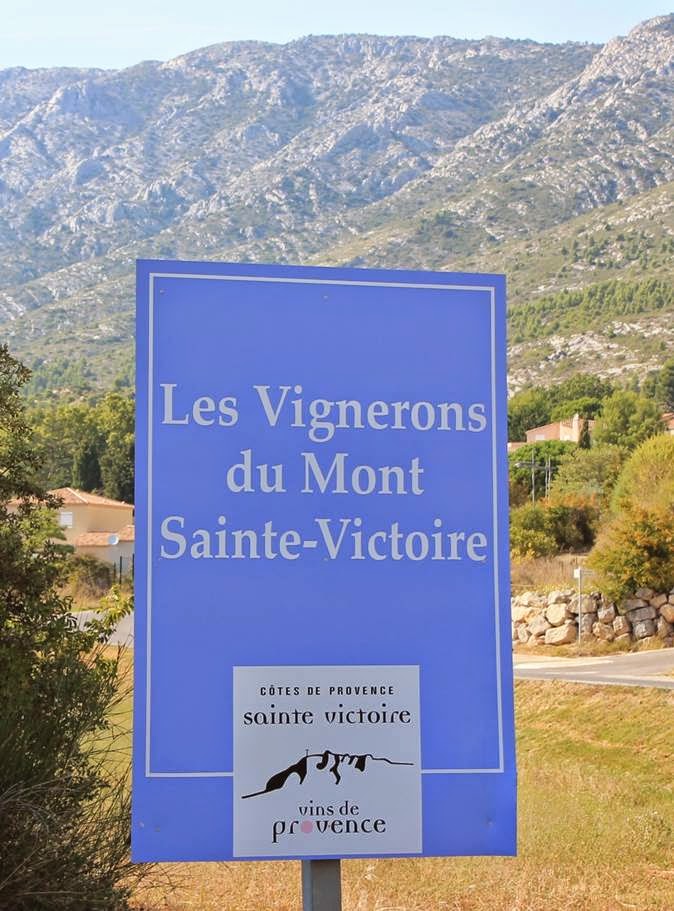
1. Les Vignerons du Mont Sainte Victoire (250 m)
This is a local winery co-op, that has several producers contributing.  Several of its rosés have won awards at national wine shows.  We are in the process of trying several of them, and to our inexperienced palettes, they are fine.  We have been told by the locals that rosés are to be served ice cold.  They also have "table wines" (one each of red, white, and rosé) that can be bought by the 5 or 10L box, or you can bring your own container and fill from the cask.  We have not tried these yet - the price for bringing your own container is ~€2/L.

Friday, 8 August 2014

The Beach Blog!

Provence and environs (ongoing)

I thought I would keep a running tally of the various beaches we went to this year, for future reference.  So I'll be updating this particular post off-and-on.

Cassis: little Cannes
12. Cassis, rating: GOOD.  Cassis is very much like a little Cannes.  There's some sandy areas mixed with rocky areas, and the footing in the water is more rocky than sandy.  If you go there, bear in mind that Cassis and the beach area are very small - finding a spot on the sand will be difficult in the summer, even if you manage to find parking.  Having said that, the downtown area around the beach is full of restaurants, little shops, and places for the kids to run around safely, and it was perfectly busy when we were there, on a 25C day in mid-October.  There are also some great sunny spots on the flat slab rocks lining the west side of the harbour (the furthest out from town is the nudest area).  The beach is easy to find - it's right with the marina and the Tourist Information office, just follow signs for those (or the Calanques tours); if worst come to worst, just walk downhill until you find it.  There are public washrooms around, but no showers (there was a place for them, but they were broken or disconnected).

Cannes: great sand, food, & ambiance; non-existent facilities & parking
11. Boulevard de la Croissette - Cannes, rating: GOOD.  The waterfront of Cannes is, like Nice, a wide promenade for walking, with beaches lining one side.  Unlike Nice, the vast majority are private - owned by hotels across the road or by restaurants right on the beach.  There are plages municipale on either end of the boulevard - one is right off the Palais des Festival, where the film festival is held.  However, if you can get to Cannes in the off-season, the public beaches are very nice, with great soft sand.  The water depth increases quickly, so there is good swimming (but not good wading for the kids).  Even in mid-October, the air temperature was 26C and the water temperature in the low 20s, so plenty warm for swimming!  The restaurant selection along the beach is varied in price, although again like Nice, everything on the beach shuts down at 18:00.  Luckily there are lots of restaurants across the boulevard with a wide variety of class-level and cost.  There is also lots of fashion shopping, small amusement parks at either end for young children, and marinas for the admiring of yachts.  The main drawback for a casual visitor would be the total lack of washroom facilities of any type anywhere along the promenade.  Parking is probably also a big problem (we had hotel parking and washroom, so not a big deal for us on this trip).  Compared to the other Riviera beaches we've been to (Bandol and Nice), it's certainly the nicest sand and it has best ambiance with the variety of shops and restaurants, but parking and no washrooms make it a poor choice of destination if you are a day-tripping.

Bandol: David on Plage des chiens (l) and walking along the marina (r)
10. Plage Centrale - Bandol, rating: GOOD.  It's interesting that we went to Nice and Bandol on consecutive beach days, because Bandol seemed to Craig to be run down compared to Nice.  Bandol can be considered the start of the Riviera, and a look at the marina tells you why - it is enormous, and the yachts range in price up to the million-dollar range.  There is a promenade along the beach/marina, but it doesn't have the same elegance as Nice, with small bars and shops instead of luxury hotels.  The beaches run along the main waterfront drag (Quai Charles de Gaulle - when you come off the autoroute from Aix or Puyloubier you'll end up on the D559 - when you see water, turn right!).  On the other hand, it's certainly more economical than Nice.  The beach itself is better, but not great: the sand is soft but shallow, near the waterline it's very gravelly, and there are boulders (say a foot or two in diameter) lurking just offshore for stubbing of toes and skinning of ankles.  On the plus side, there are free and clean washrooms all along the plage, lots of places to have snacks or food with the kids, showers, and very easy access to the various tour boats in the middle of the marina (to the calanques, dolphin-watching, Île de Bendor just off Bandol, and Île de Porquerolles just off Hyères).  There is also a Dog Beach on the other side of the marina.  It was 28C at the end of September and the parking lots were full, although hardly anyone on the beaches (they must have been in the casino).  There are lots of pay parking lots and the price is very reasonable - we paid €2.50 for 3 hours.
Plage Public du Voilier - rocky, but good swimming!

9. Promenade des Anglais - Nice. rating: GOOD.  Along the entire waterfront of Nice runs a wide pedestrian/cycling promenade called the Promenade des Anglais, because the paving was originally payed for by English tourists.  Along the entire Promenade is Nice's beach(es).  Although it is one long stretch, it is divided up into public and private beaches, the private ones being mostly restaurants that have seating on the beach.  As you can see from the picture, the charm of the beaches is not the surface - it is rocky, although that has a charming sound when the surf rattles the rocks against each other.  The water is, of course, beautiful as it is all along the Riviera - here it drops off very quickly (I was in over my head within 20 feet) but that does make for excellent swimming.  As you might expect for the Riviera, tops are optional for men and women, which maybe 10% of the women take advantage of.  Most of the topless women were presumably ex-hippies (they were certainly of that age!).  Depending on the time of year, the drive from eastern Bouches du Rhône is 1.5 hours (it took us over 2 hours because we didn't take the Autoroute most of the way).  Nice traffic is notoriously snarled, and there is a lot of construction, but we were not seriously impeded on a Friday afternoon in mid-September (the cross-town highway was nowhere near as congested as the Gardner Expressway, for example).  There are lots of public pay lots, although we found free parking on the street a couple blocks inland.  There are rentals for gear, parasailing outfits, showers at the beach stairs, and pay washrooms (€0.50).  All along the promenade are bistros right on the beach (plats price range €15-30), as well as fancy restaurant dining across the road (plats prices €45 and up).


Plage Lumière - France's smoke-free beach!
8.  Plage Lumière - La Ciotat, rating: EXCELLENT; Plage de Cyrnos - La Ciotat, rating: VERY GOOD.  La Ciotat is just east of Marseille and, depending on who you ask, somewhere near the start of the Riviera.  All the beaches are right in town, so there are many dining options, and a wide boulevard walkway links them.  They are separated by breakwaters and beachside restaurants.  We went to two.  Plage Lumière has excellent soft sand, a gentle slope in the water, washrooms, lifeguards, and showers on the beach.  It's the first Mediterranean beach where there's been a noticeable undertow (although it was pretty weak).  It is advertised as "France's largest smoke-free beach" so as you might expect, it was popular with families with very young children.  We were there on a Wednesday in September (29C) and it was full (but we could still find room to put down our beach mat).  Plage de Cyrnos has all the same facilities, but the "sand" is very fine pebbles, which is a little harder to walk on.  It also has a much steeper grade, slightly larger waves, and far fewer people.  The best part is the colours in the water - several shades of blue and green are noticeable as you look across the bay - this picture does not do the water justice.  The day we were there, a waterbomber was practicing - landing and loading water, then taking off and dumping the load.  It cycled at least 6 times while we were there.  To get there from Puyloubier is 60km and 1 hour on the non-toll roads.  We highly recommend the D96 through La Bouilladisse, then D559 from Roquefort.  The latter road is twisty with a magnificent view of the beach you're headed to as you get your first glimpse of the Med.

Pont-du-Gard: bad beach, cool scenery!
7. Pont-du-Gard, rating: POOR.  Just to be clear, Pont-du-Gard as a tourist site is excellent!  However, as a beach, it is not very good - the water is nice (clear, not too cold), but limited because there are places where the current is significant; for example, you're not allowed to swim under the bridge itself.  The shore is rounded rocks, but they range in diameter to about 10 cm, and are very difficult and painful to walk on, not to mention slippery with algae in places.  But, of course, you aren't here to go to a beach, and if you have a hot day trekking around a bunch of dusty Roman ruins, a dip in the river is very refreshing.  The kids also have fun looking at the rocks (lots of colour) and when we were there (late August) there were lots of small fry and even a couple adult fish swimming in the shallows for easy viewing.  There is a place to rent canoes up the river, and all the facilities of the site are available (washrooms, restaurants, etc., but no change rooms or washrooms right at the riverside).

La Capte: stretches out forever!
6. La Capte - Hyères, rating: EXCELLENT.  Another Riviera beach, this one located at Hyères on a spit that sticks way out into the Med.  It is very narrow but very long (the picture shows about 1/3 of the beach, it stretches even further in the other direction).  The sand is excellent and clean (no cigarette butts), there are free toilets and showers on the beach (although the facilities are not as good as at Couronne).  The water is very shallow with a gentle grade - I had to walk out maybe 75 m to get up to get over my waist.  We took the free roads - the most direct route is to follow DN7 to Brignoles then D43 south.  You can also take the D5/D554, which is mostly forested and has a neat switchback climb up a hill.  Once you're in Hyères, follow the signs for the Toulon airport (you'll have to traverse the town).  Once you pass the airport you need to be on D197 in La Capte (we followed the signs for La Tour Fondue, which is at the end of the spit).  The beach is all along the road, we accessed at a point just past the "leaving La Capte" sign.  We arrived at 4:30 on an August Monday, the weather was 27C (but a little windy); the parking was pretty much full but we found a spot on our first rotation through the parking area.  The clientele was mostly families, probably because of the shallow grade.  There was even an ice-cream vendor pushing his Dickie-dee-like cart up and down the beach; his French was too good for it to be Norman Leary.  The sails you can see in the background are catamarans that you can rent right at the beach.

The water park at Lac de Peyrolles
5. Lac de Peyrolles,  rating: FAIR to VERY GOOD.   This is a lake beach, although the beach itself is underwhelming.  The beach is hard stoney gravel and the water is cloudy (although warm enough).  However, the beach itself is not the real attraction, but rather the playground-like surroundings.  There are beach volleyball and beach soccer courts (both with excellent sand), a water park full of various floating things to climb and jump from (this costs €2/hr), and playground equipment.  There are washrooms, picnic areas, and a little canteen as well.  Overall, it's a good family destination with lots of variety.  Parking at the site is €2, although there is some free parking further away along the road and in Peyrolles-en-Provence.  It is right on the border of the Luberon, so there are some hills surrounding the lake, and some trails as well.  Unfortunately, it was very windy the day we were there, so it wasn't great beach weather.

Base Nature: breakers!
4. Base Nature - Fréjus, rating: VERY GOOD.  Base Nature is the nature park in Fréjus, which is in the French Riviera.  You can follow the DN7 from Puyloubier or Aix to Fréjus-St.Raphäel, then follow the signs in town for "Plage Fréjus" or "Base Nature" (sometimes only one or the other is on the sign).  You can also take the A8, which costs €8.40 (one way) from the Trets-Rousset exit.  The travel time difference is 60 minutes on the highway to 90 minutes on the DN7.  There is a large free parking lot, but the beach is enormous (several km long, although quite narrow) and, as you might expect for the Riviera in the summer, busy!  Luckily, it thins out a lot at night and we were easily able to park at 18:30 when we arrived.  It was mid-August, and the temperature was still 32C at that time of the evening.  The sand is pretty good - no rocks, although a little gravelly right at the water.  The water has a big drop right at the shore - maybe 3.5 feet in 10 feet, but it is more gradual after that.  The day we were there there were real breakers, as you can see from the picture.  There is a one large brasserie near the carpark, and showers on the beach (no change rooms).  There is only one pay toilet that we could see - i.e. one single toilet!  The cost is only €0.10, but annoying if you have to go all the way back to the car for a coin.

La Couronne: very similar to Risser's!
3. La Couronne-Plage, rating: EXCELLENT.  This is a very easy beach to travel to - it is right at the end of the D9 highway from Aix; therefore the beach is west of Marseille.  Coming from Puyloubier, we took the D6 towards Marseille, then across the city A51-A7-A55 (the last then crosses D9).  This route is toll-free but still a divided highway practically the whole way.  A very easy and pleasant trip, no traffic at 3pm on a Tuesday in August.  The beach itself has a 500-spot parking lot for €3.50, but it was full when we got there, so we parked along the highway - the cars stretched out probably 1 km on both sides of the highway and the street alongside (just like Risser's on a hot day!).  The temperature was 34C, so not surprising that it was so busy.  The sand was excellent - soft and deep, very few cigarette butts, good for digging and building sand castles.  The view wasn't quite as nice as Les Lecques, but still interesting.  The facilities were excellent: a 4-head shower right at the exit to the beach, plus well-tended and free washrooms, much like Risser's.  There were even some small breakers where the waves passed over the sandbar.  The grade into the water is very gradual - Andrew even went in up to his neck!  Very busy but not so crowded that you couldn't find a place because the sand is quite wide.  There are a few shops (a restaurant, ice cream place, etc.), but this is not in town.

Les Lecques: not too busy for 32C!
2. Les Lacques - Saint-Cyr-sur-Mer,  rating: GOOD. This beach is in Saint-Cyr-sur-Mer and is long (but narrow).  There are some free parking lots, and others for €1/hour.  Beach access is free.  There is a row of shops/restaurants along the seawall (it appears most only take cash).  The sand is quite good, mostly fine sand with a few rocks mixed in.  It was busy but not completely packed when we were there (11-13:00 on a Tuesday in August, sunny 32C).  The deepness of the water increases gradually, and there is a breakwater at one end (for the yacht club) to keep the waves down.  Very safe for small children, we saw people of all ages (including teenagers by themselves, young couples with or without children, grandparents, etc.).  There are a lot of cigarette butts on the beach, but I expect that's true everywhere.  Scenery is quite nice with a curved bay on one side with a forested hill coming down to the water and houses dotting the hillside closer in.  Water is very clear.  There are public restrooms towards the centre of the beach on the boardwalk.

1. D-day Beaches (as beaches, not as historical sites): Omaha, Gold, and Juno.  Remember that the tides are very high along this part of Normandy, so the amount of sand is going to vary greatly with the tide!  For none of these did we find things like change rooms or taps to rinse off your feet, like you would at a Provincial Park beach in Nova Scotia.  We also didn't see public restrooms either, although we didn't have to "go" during any of these visits, except at Juno where we'd already paid to see the museum so we used their facilities (likewise, there is a museum right on the beach at Gold, and one just up the road about 3-5 minutes walk from Omaha).
Omaha: sand as far as the eye can see!
(a) Omaha (Saint-Laurent-sur-Mer).  By far the best beach for my tastes.  Very wide and open, plenty of free parking, wide roads compared to what is normal in the area.  Very clean, nice sand, wide, few people.  Very few nearby amenities (to eat, etc.).
 (b) Gold (Arromanches-les Bains).  The main beach is right in the village, so parking and travelling to the site in the car is difficult.  There is a pay lot right next to the beach and museum, but it is small.  We were there at high tide and there is literally no beach when the water is all the way in.  The sand (that we saw before it was covered) was good, there are still some Mulberries that you can apparently walk out to when the tide is out.  Overall, very poor access but good if you're looking for cafés and shops.
(c) Juno (Courseulles-sur-Mer).  There is a yacht club right next to the beach, with lots of windsurfers out.  The beach has nice sand, but when we were there, at least, there was a lot of seaweed and a slightly rotten smell coming from it.  Luckily you can get away from it because the beach covers a lot of area when the tide is out.  There is a watch post (not sure if they are lifeguards per se) in the middle.  The town centre is a short walk, between the yacht club and the Juno Centre there is a good amount of parking.